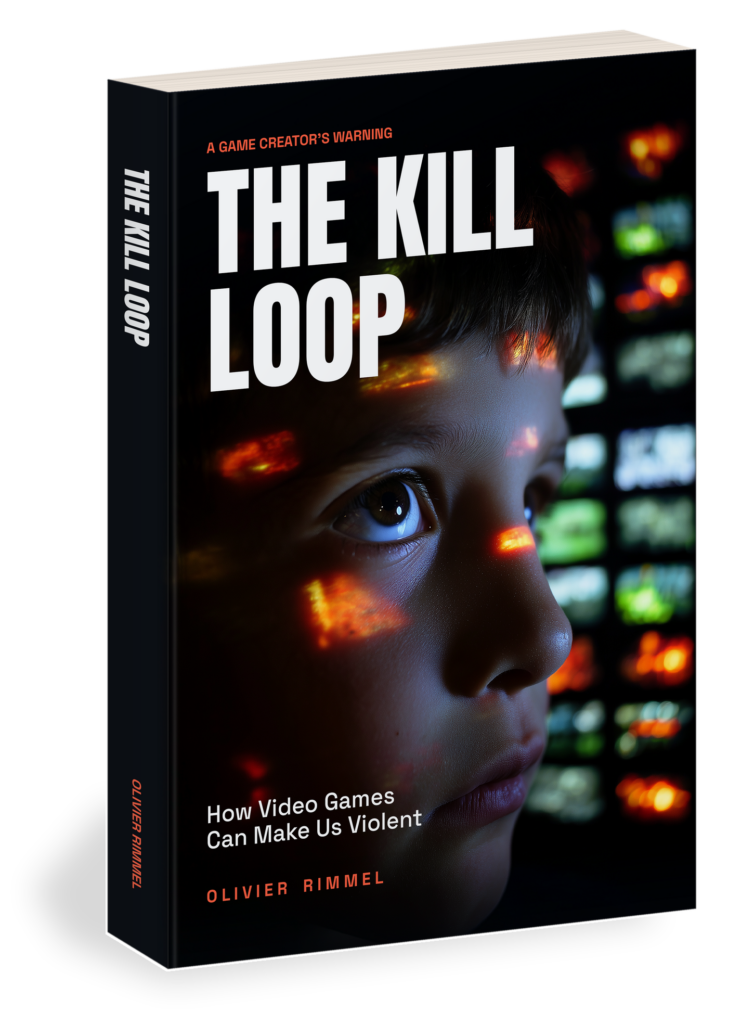
The Kill Loop
How Video Games Can Make Us Violent
Aim. Fire. Hit. Kill. Reward. Respawn. Then again.
Grand Theft Auto VI is one of the most anticipated games ever made, and Miami Beach voted to let it advertise on the city’s beaches. Millions will spend hours in it stealing, beating and killing, children among them, as with every adult-rated installment since 2001. And the old refrain will come back: video games don’t make anyone violent, because no study has proved it.
Absence of evidence is not evidence of absence. Armies did not wait: they train soldiers on cousins of the shooters children play, and the US Navy steers the periscopes of some of its submarines with game controllers.
I wrote game code in the 1980s. I know the circle at the heart of every shooter, the one that pays for each kill and sends the player back for more. I call it the kill loop. The question was never whether games make people violent. It is which games, for which players, and at what dose.
This book follows the loop into violence of gestures, violence of ideas and self-directed violence. It gives the skeptics their strongest case, then hands parents a tool: a grid that sorts games by their mechanics, not their content, into red, orange and green.
Sixty games go through that grid, from Call of Duty to chess, each with its score and the setting that changes its color. Fortnit, without a drop of blood, comes out red. The Last of Us, rated for adults, comes out green.
Along the way it shows what the age ratings miss: the microphone open by default to strangers, the loot box that twelve studies out of thirteen link to problem gambling, the season designed never to end. It tells parents what can be switched off tonight, and lawmakers what could be regulated tomorrow.
It is not a trial of video games. It is a call to measure what these games do to players, and to protect children without waiting for the answer.
- Prix
- 20,00 €
- Pages
- 316
- Format
- Broché, 15,2 × 22,9cm